

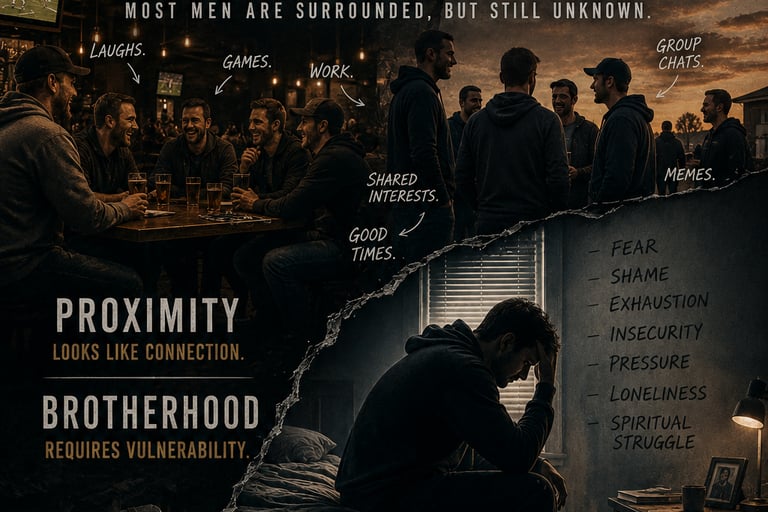

Most men are surrounded by people while remaining deeply unknown.
They work around other men.
Laugh with other men.
Sit in church beside other men.
Watch games together.
Join fantasy football leagues.
Debate sports.
Talk trash in group chats.
Share memes.
Discuss work.
Spend years around the same people.
And yet many of those same men have nobody who truly knows what is happening beneath the surface.
Modern men often know how to gather without ever being known.
That is not brotherhood.
That is proximity.
There is a difference.
Many male relationships are built around:
Activity
Entertainment
Shared interests
Humor
Routines
Distractions
But very few are built around honesty.
A man can spend years talking to the same people while never once speaking truthfully about:
Fear
Shame
Exhaustion
Temptation
Insecurity
Pressure
Loneliness
Spiritual struggle
Many men know how to maintain connection while carefully avoiding exposure.
And most do not even realize they are doing it.
One of the greatest misunderstandings among men is believing that constant interaction automatically equals brotherhood.
It does not.


Shared activity can create familiarity while still keeping everyone emotionally hidden.
A group of men may know:
each other’s teams
schedules
hobbies
personalities
opinions
jokes
while never truly knowing each other at all.
Nobody asks deeper questions.
Nobody risks honesty.
Nobody wants to disrupt the comfort of surface-level interaction.
Because once conversations move beneath entertainment and performance, discomfort appears.
Real questions begin surfacing.
Questions many men spend their lives avoiding.
How are you really doing?
What are you carrying right now?
What fear has been controlling you lately?
Are you actually okay?
Those questions require something many men have never learned to live with comfortably:
Most men do not avoid deeper brotherhood because they hate people.
They avoid it because being fully known feels dangerous.
That fear shapes more male relationships than most men realize.
Many men quietly believe:
If people see weakness, they may lose respect.
If people see inconsistency, they may think differently.
If people see struggle, they may pull away.
If people see beyond the image, they may leave.
So men learn to perform.
Not always consciously.
But consistently.
They perform strength.
Perform confidence.
Perform stability.
Perform spirituality.
Perform control.
Meanwhile, entire sections of their lives remain hidden behind carefully managed versions of themselves.
Some men become experts at appearing strong while quietly falling apart internally.
And the longer that performance continues, the harder honesty becomes.
The deeper issue is not simply pride.
Pride absolutely exists.
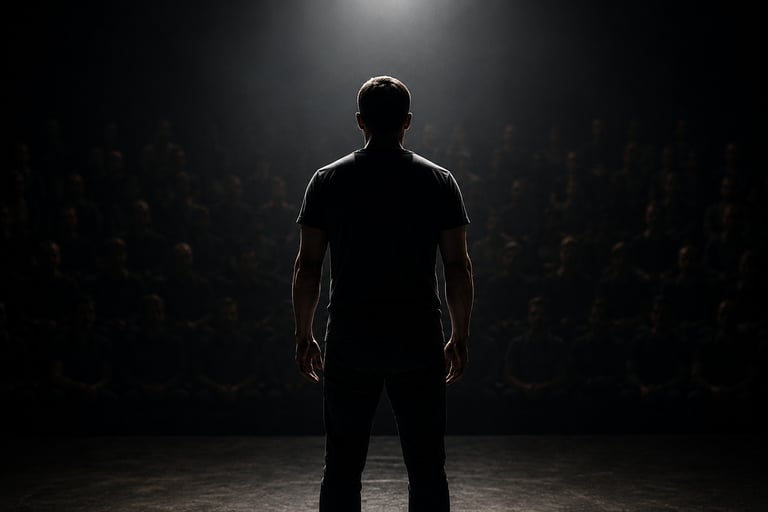
But underneath much male isolation is fear.
Fear of weakness.
Fear of shame.
Fear of exposure.
Fear of abandonment.
Many men are terrified that if people truly saw beneath the surface, connection would disappear.
So instead of risking honesty, they maintain distance.
Sometimes through humor.
Sometimes through sarcasm.
Sometimes through busyness.
Sometimes through leadership.
Sometimes through usefulness.
Sometimes through silence.
But underneath it all is self-protection.
Many men learned long ago that vulnerability felt unsafe.
So they adapted.
They learned how to survive through hiding.
And over time, what began as protection slowly became identity.
Isolation rarely feels destructive in the beginning.
At first, it feels safer.
No explanations.
No exposure.
No vulnerability.
No risk of disappointment.
No possibility of rejection.
Isolation creates the illusion of control.
A man convinces himself:
“I’m fine.”
“I can handle it.”
“I don’t need anyone.”
“This is just how men are.”
But isolation slowly changes a man internally.
The problem with isolation is not simply being alone.
The problem is what grows unchecked in hidden places.
Fear grows there.
Shame grows there.
Distorted thinking grows there.
Hidden struggles grow there.
Pressure grows there.
And eventually many men become trapped inside versions of themselves they no longer know how to escape.
What remains hidden eventually begins shaping identity.
Many men secretly live exhausted lives because they are carrying the constant pressure of maintaining an image.
An image of strength.
An image of control.
An image of having everything together.
And the exhausting part is this:
The image often becomes more protected than the man himself.
So instead of being honest, men hide.
Instead of confessing struggle, they manage perception.
Instead of allowing trusted people to know them deeply, they stay useful, funny, capable, informed, busy, or spiritually polished.
But eventually performance creates distance.
Not only from others.
From themselves.
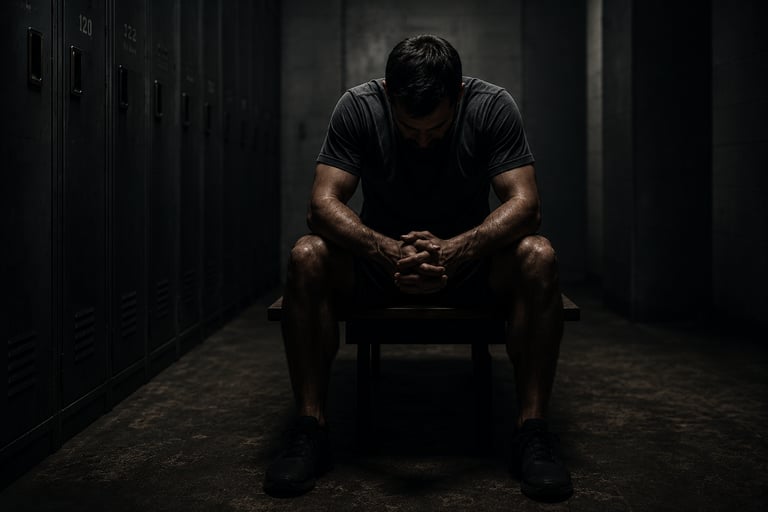

Some men become so accustomed to hiding that they no longer know how to speak honestly without feeling exposed.
Many men say they want brotherhood.
But what they actually want is connection without vulnerability.
Encouragement without honesty.
Friendship without exposure.
Accountability without transparency.
Support without being fully known.
But real brotherhood cannot exist where image management remains untouched.
Because brotherhood is not built through performance.
It is built through truth.
Not perfection.
Truth.
Not carefully maintained appearances.
Truth.
Not impressive reputations.
Truth.
Real brotherhood begins where pretending starts dying.
This does not mean every relationship suddenly becomes deep.
It also does not mean every man wants real brotherhood.
Some men intentionally avoid depth because depth threatens the image they have spent years building.
Some hide behind humor.
Some behind knowledge.
Some behind success.
Some behind theology.
Some behind entertainment.
Some behind constant distraction.
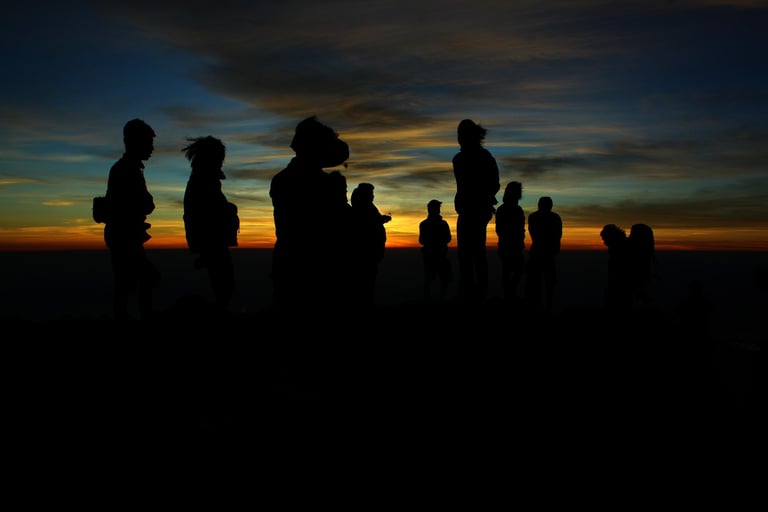
Many men know how to stay socially connected while remaining emotionally unavailable.
And brotherhood cannot be forced.
You can invite honesty.
Create space.
Model openness.
Speak truth.
But you cannot force men to step into depths they are unwilling to enter.
Some men would rather protect the image than risk being known.
Still, hiding comes with a cost.
A heavy one.
Because isolation slowly teaches men to live divided lives.
One version presented publicly.
Another version carried privately.
Over time that division creates exhaustion.
A man begins feeling unknown even inside relationships because nobody actually sees beyond the performance.
And eventually the loneliness becomes deeper precisely because people only know the image.
That kind of isolation quietly destroys many men.
Not all at once.
Slowly.
Silently.
Underneath the surface.
The answer is not emotional exposure to everyone.
Wisdom matters.
Discernment matters.
Trust matters.


But many men are waiting to feel completely safe before becoming honest.
And real brotherhood is often built when honesty comes first.
Slowly.
Awkwardly.
Uncomfortably.
Especially for men who have spent years surviving through self-protection.
Real brotherhood begins when a man stops building identity around hiding.
When he stops needing to appear untouchable.
When he stops protecting perception at all costs.
When truth becomes more important than image.
Many men are not truly known because they have spent years trying to become acceptable instead of honest.
And eventually that performance becomes exhausting.
The constant pressure to maintain strength.
Maintain control.
Maintain the appearance of stability.
Meanwhile, fear quietly controls the entire system underneath.
Fear of exposure.
Fear of rejection.
Fear of weakness.
Fear of abandonment.
Fear of being left alone again.
But isolation is not freedom.
And hiding is not strength.
A man was never meant to spend his life trapped behind a carefully managed version of himself.
So the real question is not:
“Do you have friends?”
The real question is:
Are you known?
Does anyone actually know:
Your fears
Your struggles
Your pressure
Your inconsistencies
Your doubts
Your weaknesses
The things you work constantly to hide?
Or have you simply become skilled at maintaining an image while quietly remaining isolated underneath it?
Because many men spend years surrounded by people while never allowing themselves to be fully seen.
And eventually the performance becomes its own prison.
Fear tells men to protect themselves at all costs.
Faith chooses honesty over image management.
Trust allows a man to stop hiding long enough to finally be known.
Continue the Journey
Not sure what's driving you?
Explore the tools and resources inside Beneath the Surface and continue uncovering the fears, beliefs, and patterns shaping your life.
Fear Is Rooted. Faith Is Chosen. Trust Is Lived.
FEAR FAITH TRUST
Fear Is Rooted. Faith Is Chosen. Trust Is Lived.
© 2026 Fear Faith Trust. All rights reserved.
Privacy Policy | Copyright & Usage Policy | Contact
anchoredformation.com